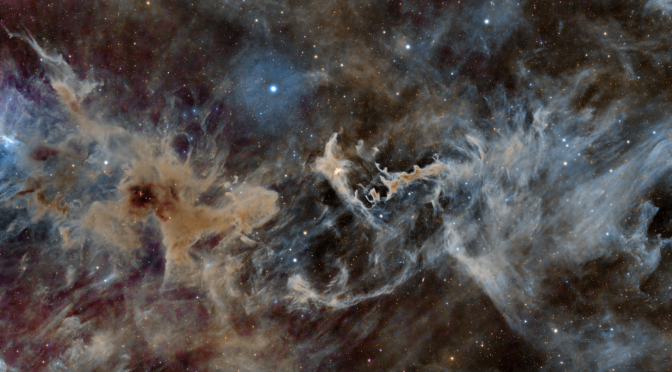
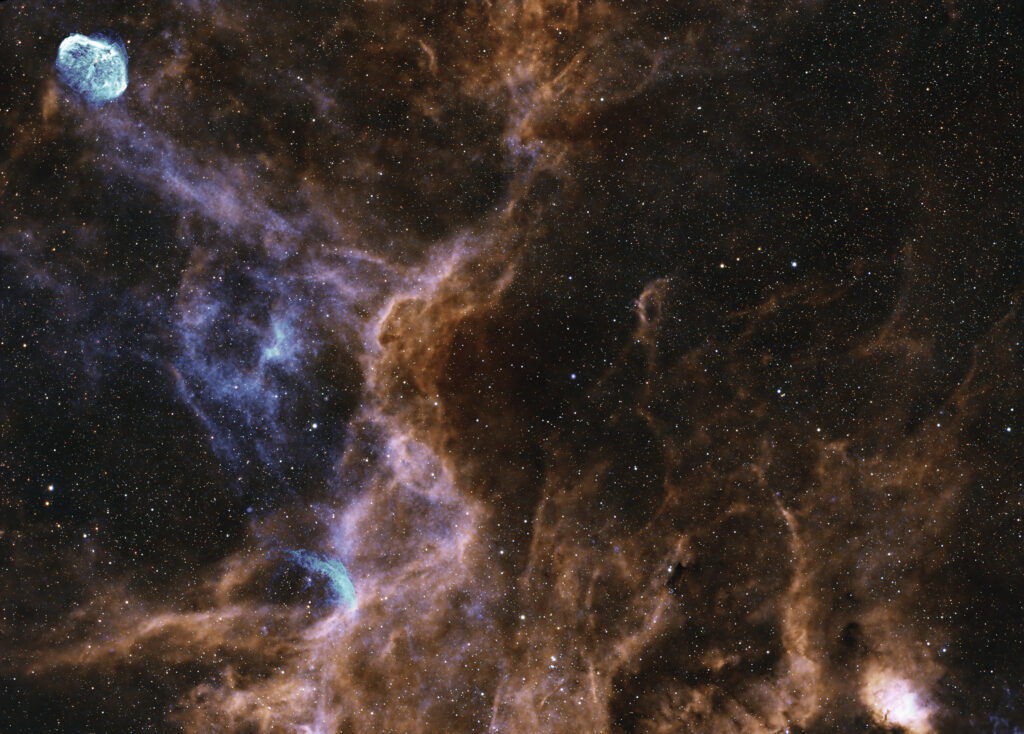
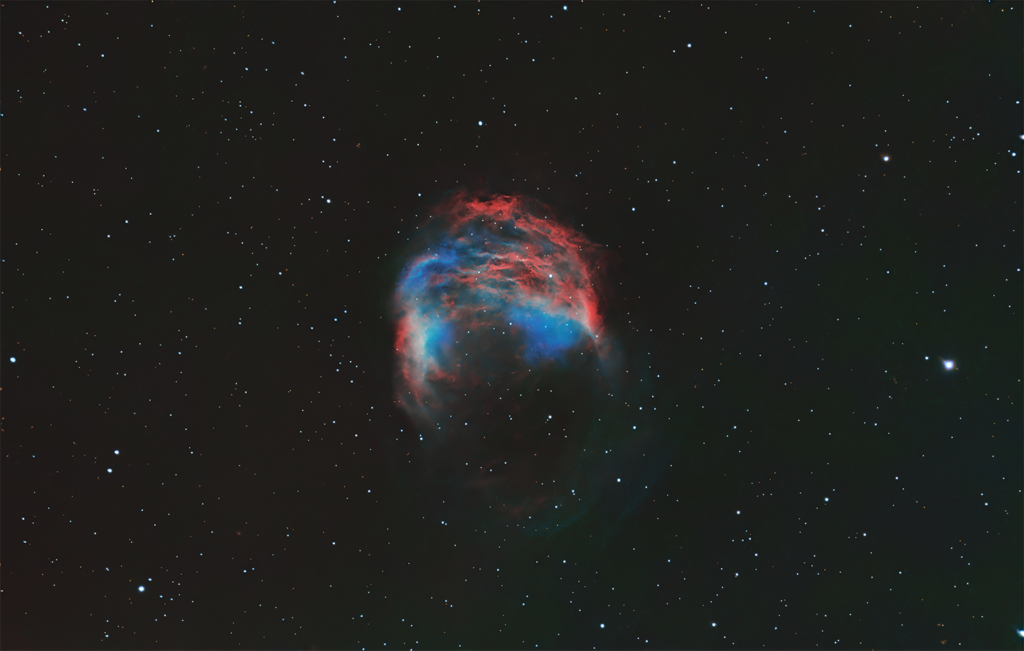
From Starfront Observatories near Brady, Texas – I caught a predator lurking in the depths of Cepheus. LDN 1235, better known as the Dark Shark Nebula, glides through a sea of stars approximately 650 light-years from Earth. The photons in this image left this cosmic nursery around the year 1375 – as the Renaissance was beginning to dawn in Europe and the Ming Dynasty was rising in China.
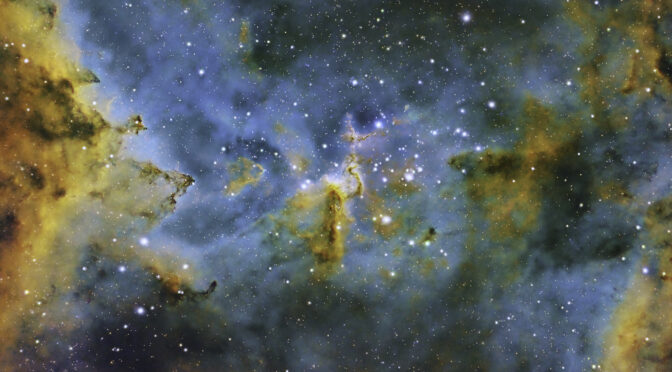
From the dark skies where I keep my telescope near Brady, Texas, I captured this dramatic nebula complex in the constellation Cepheus – a cosmic battleground of dark and bright nebulae that truly lives up to its dragon moniker.
This field showcases LDN 1228 (the dark nebula) and LBN 550 (the bright reflection nebula), located approximately 1,200 light-years away. That means the photons captured in this image began their journey around the year 825 CE – when the Viking Age was in full swing and Charlemagne’s grandsons were dividing his empire.
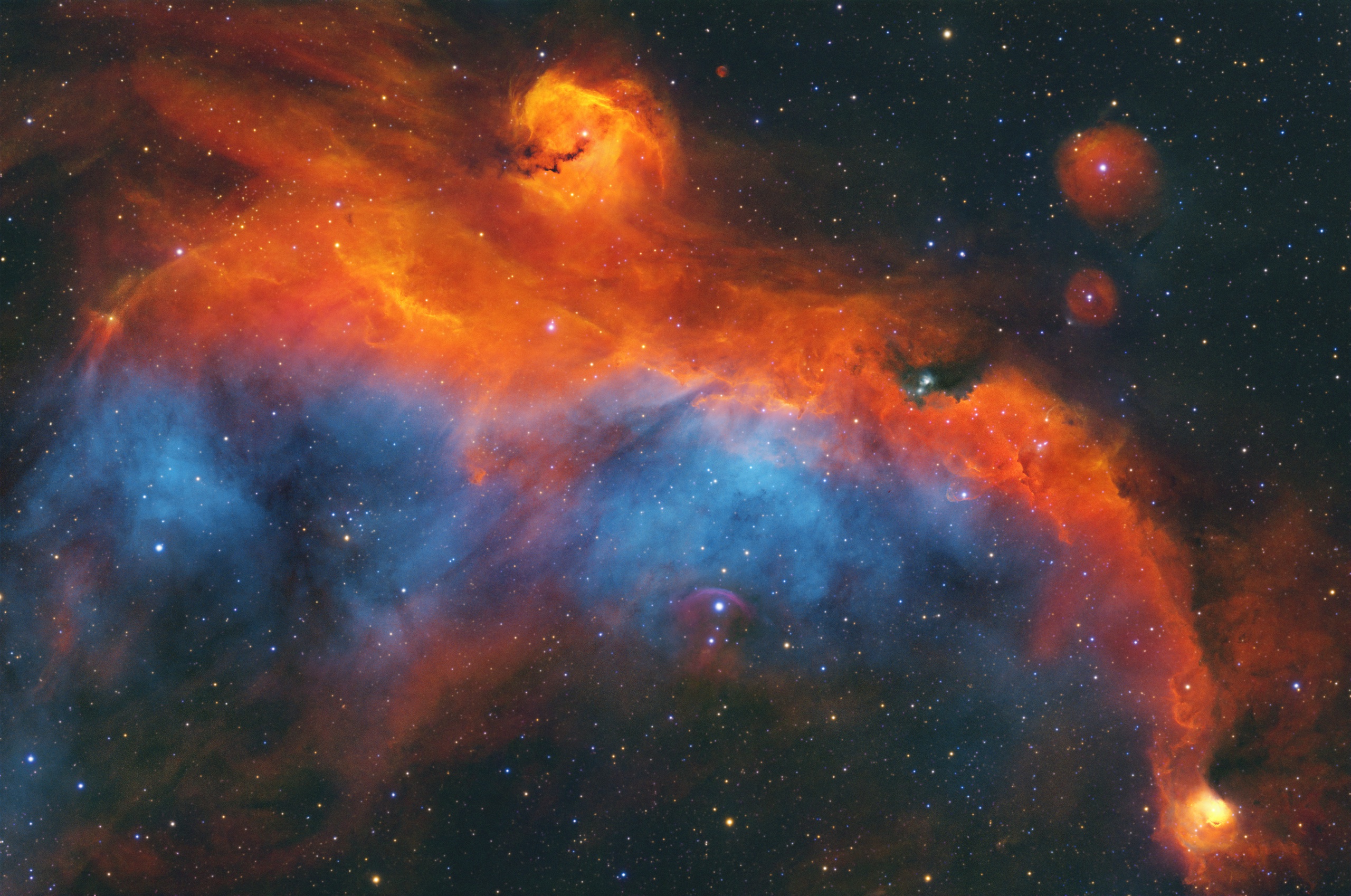
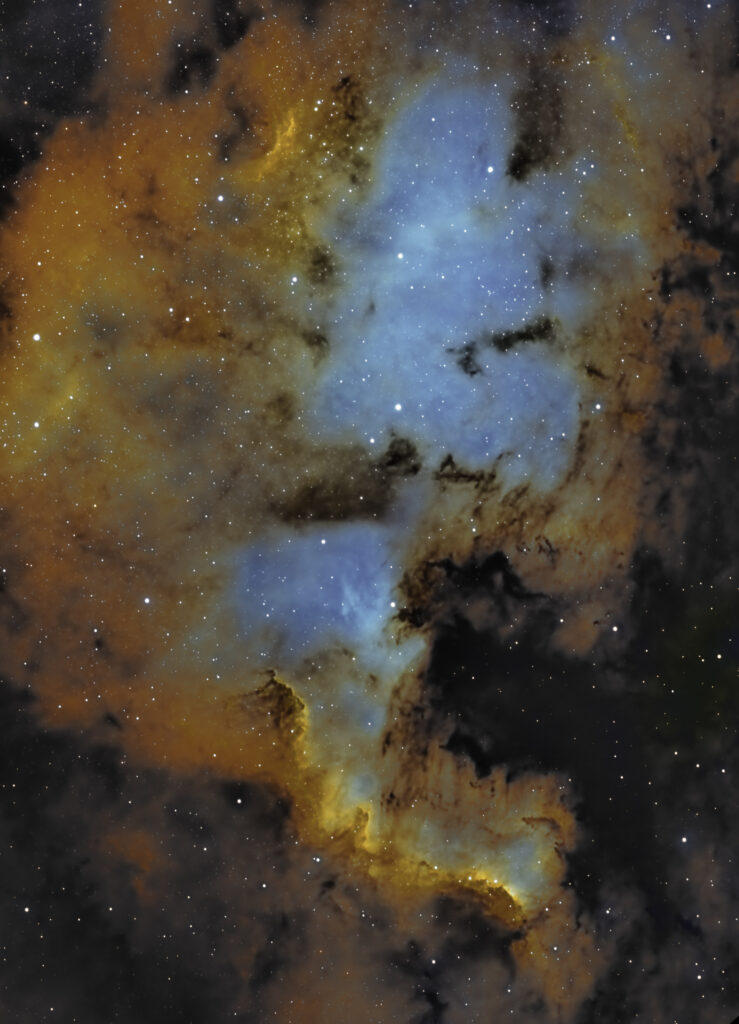
IC2177, : The Seagull Nebula. Flying high in our wintertime skies, here i’ve captured this object in a combination of two distinct treatments. SHO (sulfur-2, hydrogen-alpha and oxygen-3) also known as the ‘Hubble Palette’ – a way of mapping deep-space objects wavelengths to a format for the human eye. See below for another version that excludes the blue oxygen-3 and shows more of the subtle gradient between deeper reds, pinks, oranges and yellows. More info here on my Astrobin.com site.
In case you’ve missed my celestial (and cocktail) updates, I’m back and kicking, and ramping my astrophotography into high gear. This is one of many deep-space images to come from my remote telescope rig located at @starfront_observatories in truly dark skies near Brady, Texas (see caption below).
When you view my astrophotography on Facebook and Instagram, have you ever wondered how the heck I’m doing this? Well, more than a few of you have asked, so I thought I’d write a short bit of background on the process. If you’re interested in learning more, please reach out.
I dove headfirst into this hobby during the summer of 2017 when a total lunar eclipse cut across North Georgia. I picked up a used Celestron reflector telescope, one I’d lusted for as a preteen in all those gift catalogs. And almost 50 years later, and I finally owned one! And with that purchase, the descent into AAS (astronomy acquisition syndrome) began.