
The Dark Shark Nebula 🦈
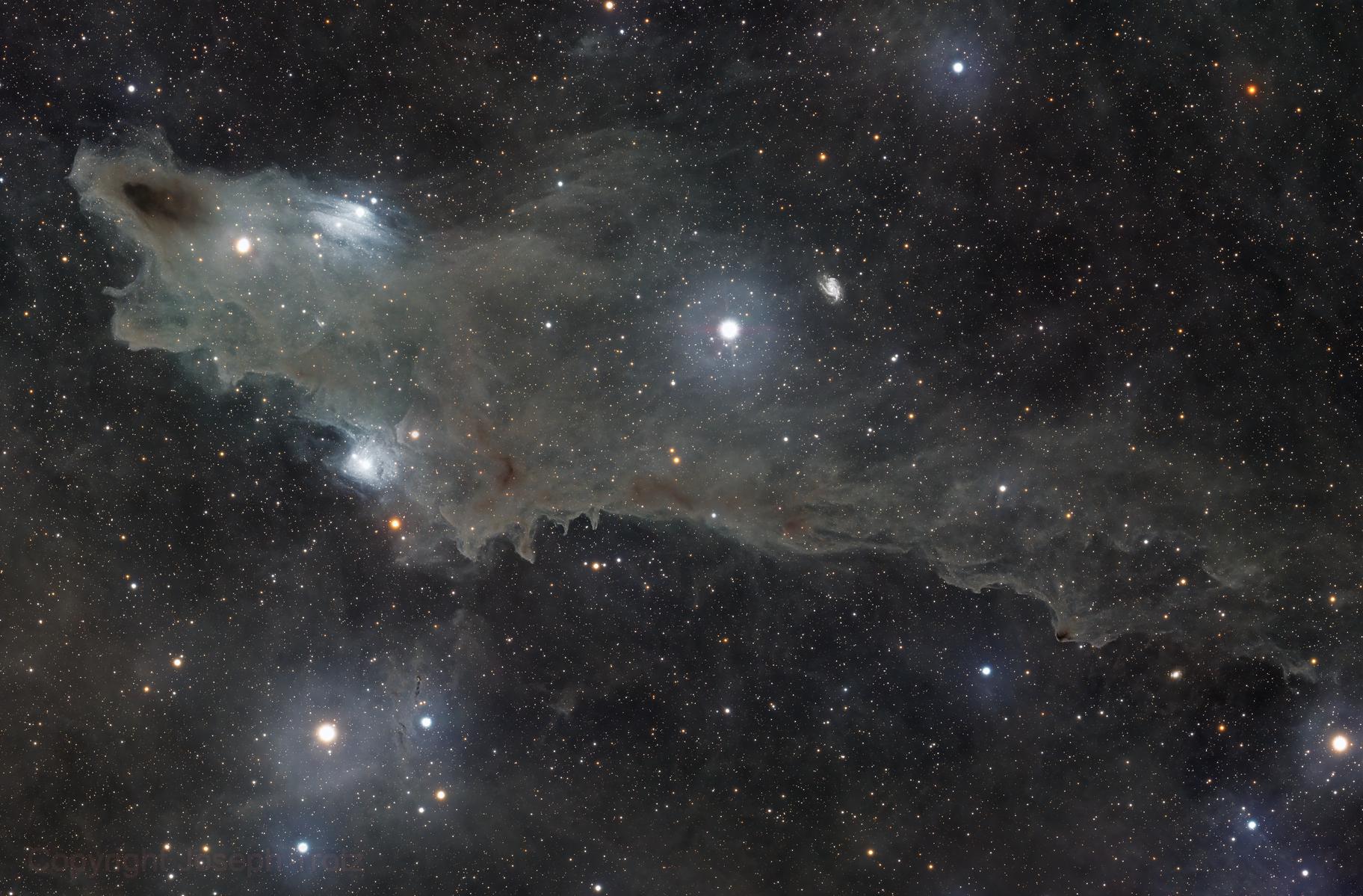
From Starfront Observatories near Brady, Texas – I caught a predator lurking in the depths of Cepheus. LDN 1235, better known as the Dark Shark Nebula, glides through a sea of stars approximately 650 light-years from Earth. The photons in this image left this cosmic nursery around the year 1375 – as the Renaissance was beginning to dawn in Europe and the Ming Dynasty was rising in China.
This remarkable dark nebula gets its fearsome appearance from dense molecular clouds blocking the light of background stars, while embedded reflection nebulae illuminate its “eye” and “fins” with the scattered light of nearby stars. The shark seems to swim through wisps of fainter nebulosity, creating one of the night sky’s most striking examples of pareidolia.
These dense clouds are stellar nurseries where future generations of stars are beginning to form, hidden within the darkness. The contrast between the opaque dark nebula and the delicate blue reflection regions showcases the complex interplay between dust, gas, and starlight in our galaxy.
Acquisition Details: 📍 Starfront Observatories, Brady, TX 📅 July 21-25, August 5-7, 18-19, 23-25, 2025 ⏱️ 51.8 hours total integration time. At the time, one of my longest integration times ever.
- Luminance: 481 × 3-5min (30.6 hrs)
- Red: 142 × 5min (11.8 hrs) + 18 × 1min
- Green: 140 × 5min (11.7 hrs)
- Blue: 142 × 5min (11.8 hrs)
🔭 Antlia LRGB filters
🎯 Gain 100, sensor cooled to -4°C
Fourteen nights of imaging across multiple sessions to capture this elusive celestial predator in all its glory.
#astrophotography #deepsky #nebula #cepheus #ldn1235 #darkshark #darksharknebula #darknebula #reflectionnebula #lrgb #remoteastronomy #starfrontlabs #bradytx #darkskies #molecularcloud #astronomy #nightsky #spaceiscool #astrobin #deepskyobject