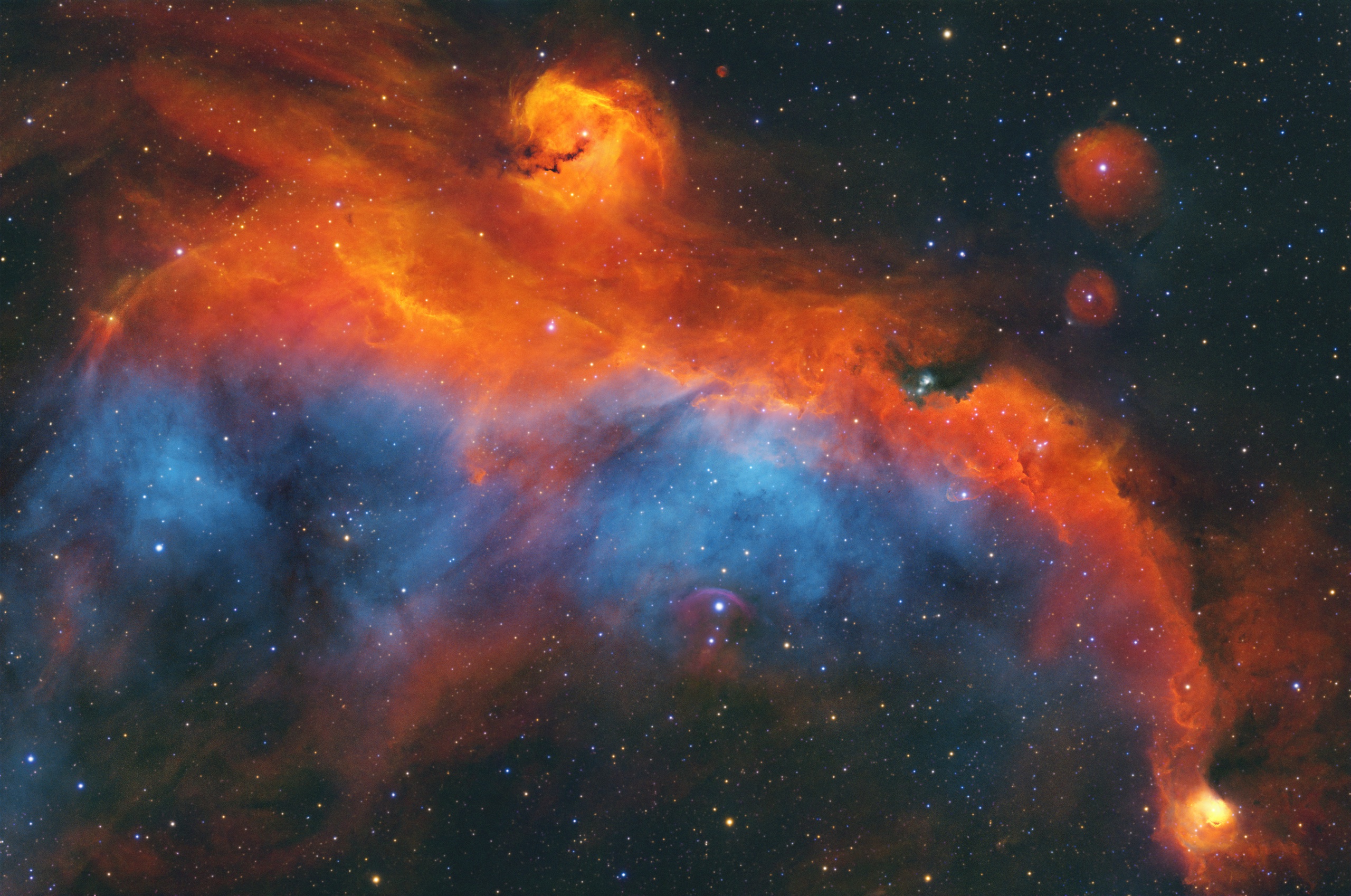
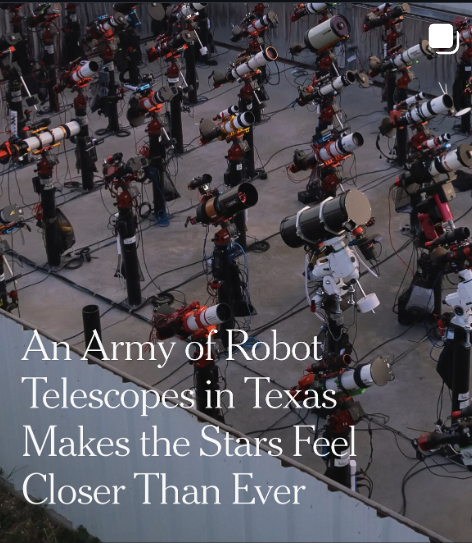
In case you’ve missed my celestial (and cocktail) updates, I’m back and kicking, and ramping my astrophotography into high gear. This is one of many deep-space images to come from my remote telescope rig located at @starfront_observatories in truly dark skies near Brady, Texas (see caption below).
This is The Seagull Nebula 🦅✨
Soaring through the winter skies of the constellation Monoceros, this cosmic bird spans over 100 light-years from wingtip to wingtip. The Seagull Nebula sits about 3,800 light-years from Earth—close enough to show incredible detail, yet so far that the light reaching my camera left during the Bronze Age.
Each photon that hit my sensor traveled nearly 23 quadrillion miles to get here. Worth the wait IMHO. 🌌
This emission nebula glows primarily in hydrogen-alpha (that deep red), with oxygen-III delivering the cyan blue tones, energized by hot young stars being born within the clouds.
The second version is a blend with another color palette emphasizing the fainter red/yellow gasses and suppresses the O3 blues.
The “head” of the seagull (upper left) is actually a separate region called NGC 2327, where intense stellar winds are sculpting the gas into those dramatic shapes that I was very happy to capture so much detail.
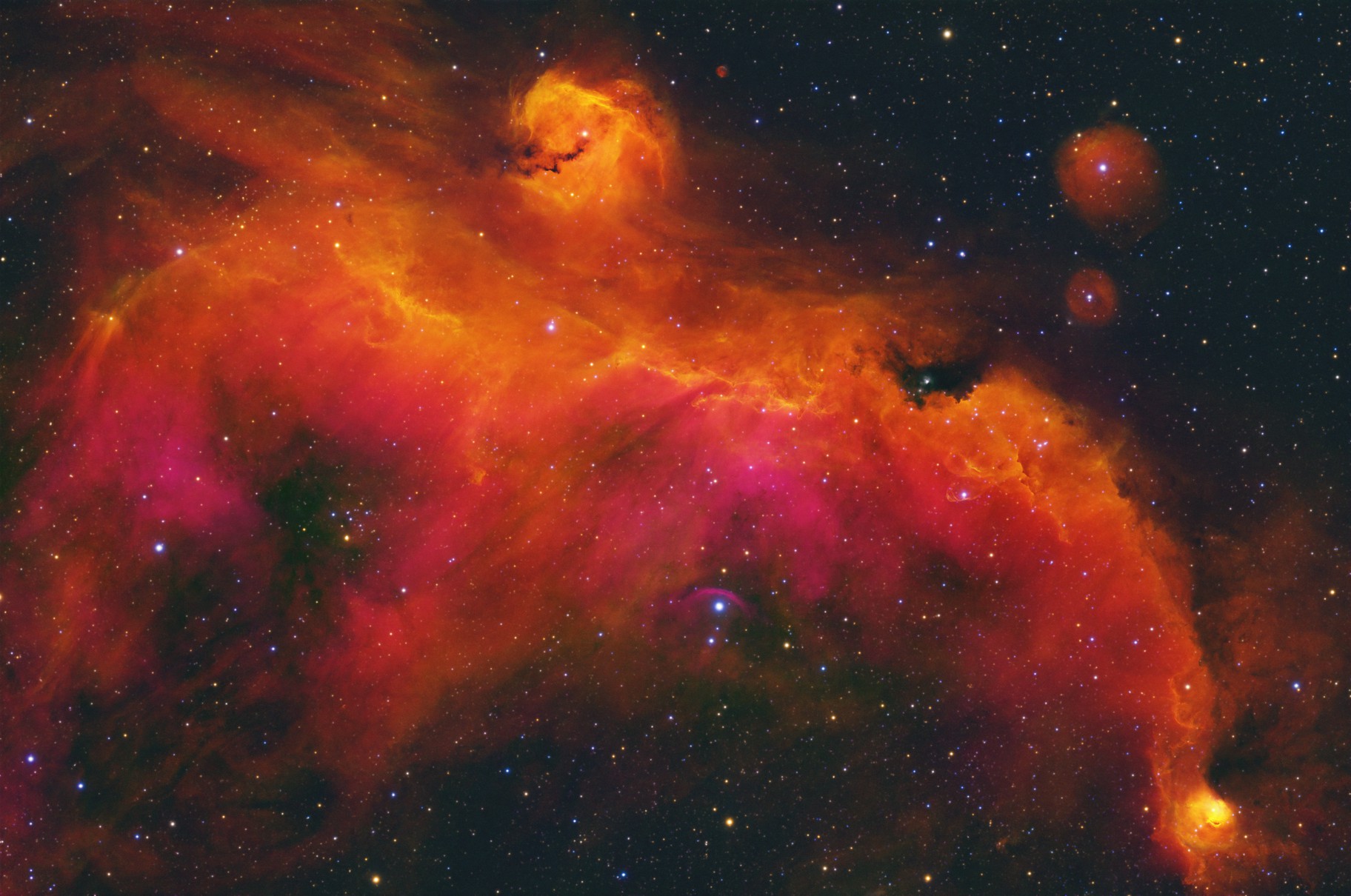
Acquisition info: 📅 Dec 26, 2025 – Jan 14, 2026 🔭 Remote observatory setup near Brady, TX⏱️ ~35 hours total integration 🎨 Narrowband: Ha (11.4h) + SII (11.6h) + OIII (8.2h) 🌈 RGB: Red/Green/Blue (1h each) 📷 ZWO ASI2600MM Pro @ -15°C