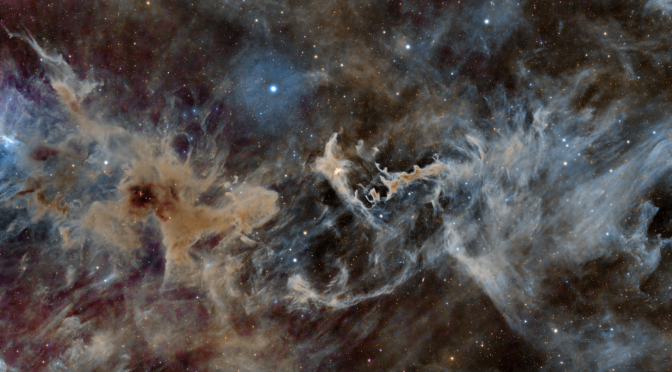
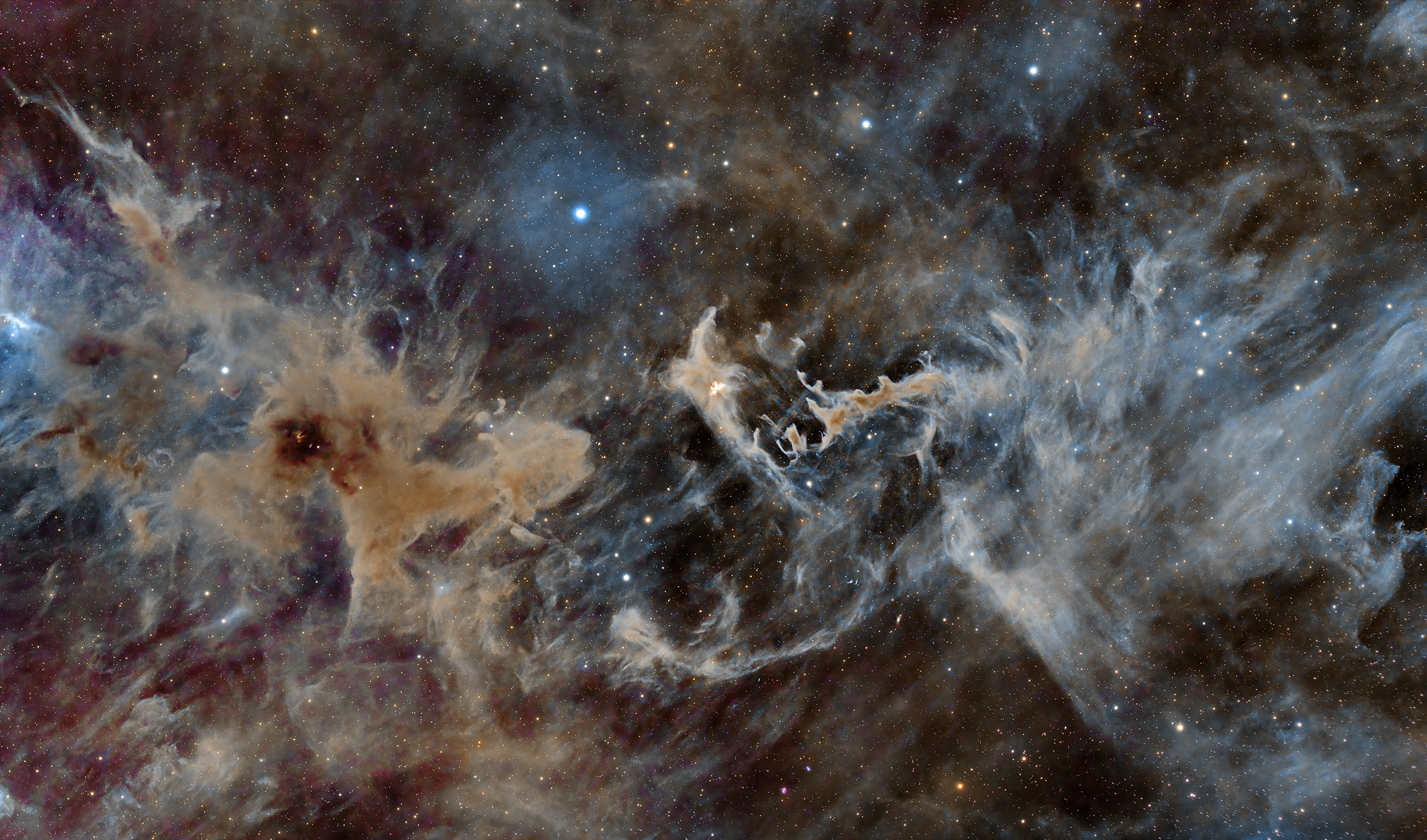
From the dark skies where I keep my telescope near Brady, Texas, I captured this dramatic nebula complex in the constellation Cepheus – a cosmic battleground of dark and bright nebulae that truly lives up to its dragon moniker.
This field showcases LDN 1228 (the dark nebula) and LBN 550 (the bright reflection nebula), located approximately 1,200 light-years away. That means the photons captured in this image began their journey around the year 825 CE – when the Viking Age was in full swing and Charlemagne’s grandsons were dividing his empire.
The intricate structure reveals where stellar winds and radiation from young, hot stars illuminate and sculpt surrounding molecular clouds, while dense dark nebulae block the light from more distant stars. The beautiful interplay of blue reflection nebulosity, amber dust lanes, and deep crimson hydrogen regions creates this dragon-like appearance.
Acquisition Details: 📍 Starfront Observatories in Brady, TX 📅 August 23-28 & September 1-3, 2025 ⏱️58.2 hours total integration time
- Luminance: 339 × 5min (28.2 hrs)
- Red: 118 × 5min (9.8 hrs) + 24 × 1min
- Green: 125 × 5min (10.4 hrs)
- Blue: 117 × 5min (9.8 hrs)
🔭 Antlia LRGB filters 🎯 Gain 100, sensor cooled to -4°C
Eight nights of remote imaging capturing ancient starlight and the birthplace of future solar systems.
#astrophotography #deepsky #nebula #cepheus #ldn1228 #lbn550 #fightingdragons #lrgb #remote astronomy #starfrontl observatories #bradytx #darkskies #molecularcloud #reflectionnebula #darknebula #astronomy #nightsky #spaceiscool #astrobin